A tram street that works on foot
In front of a grand Melbourne station, trams, crossings and pavements share one wide street. Why does it feel manageable?
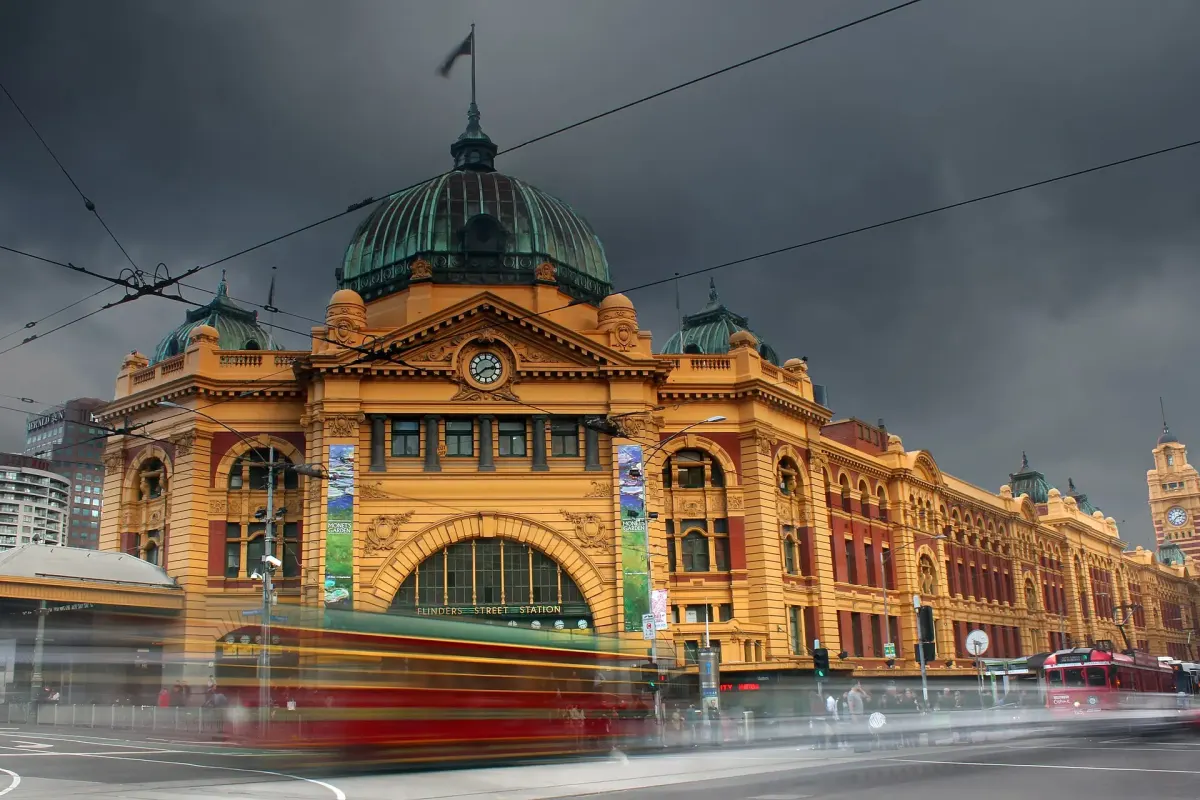
A street that carries trams has to be a good deal calmer than it looks. The long exposure in this photograph shows a red tram as a smear of colour, passing in front of a grand railway station with a domed corner. The crowd on the pavement is a blur too. It is a busy place, and it still reads as orderly.
Several simple things make that possible.
One vehicle sets the pace
Trams run on fixed rails, at predictable intervals, so pedestrians learn where they will be. Cars, in a street like this, are expected to follow the same rhythm. Because the tram is big, slow to turn and highly visible, it keeps the street on its schedule.
Overhead wires are untidy in a photograph, but they allow the tram to be quiet and fast without a single exhaust pipe on the corner.
A building that gives the street a centre
The station frontage, with its clock, arches and dome, works as a landmark. People use it to arrange where to meet, and to find their way. A transport interchange on a corner like this is the opposite of a car park: it pulls pedestrians into the street, and the street rewards them with shelter, shops and somewhere to wait. That is why the street feels shared between people and vehicles, rather than handed over to one of them.