The warmth of a city facade
A tall office front in glazed terracotta turns repetition into texture. Here is how its vertical piers, panels and windows work together.
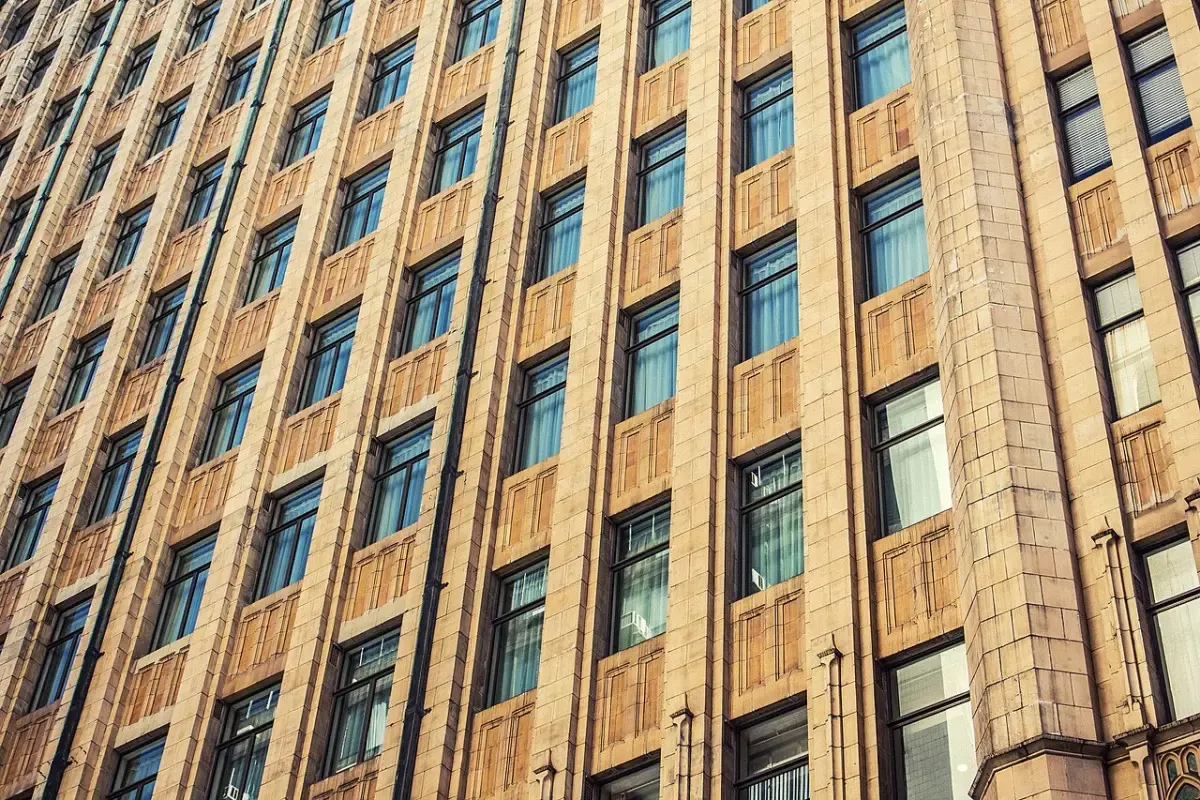
Look up at a tall building and you usually see glass reflecting the sky, or a grid of grey. This front is different. It is clad in small glazed blocks the colour of sand and honey, and even on an overcast day it seems to hold some of the light that falls on it.
The photograph is taken from the pavement, tilted steeply upward, which is how most people meet a building like this. Nobody gets to see the whole elevation at once. What they see instead is a pattern that keeps going, and the pattern is what we should look at.
Lines that lift the eye
The strongest move is vertical. Tall piers run unbroken from the base to the top, and the windows sit between them in narrow columns. The horizontal bands that would normally cut the front into floors are pushed back and made small, so the eye travels up rather than across.
This is a very old trick for tall buildings in dense streets. It makes the structure feel lighter than it is, and it suits the point of view of someone looking up from below, with their neck bent, wanting to be led somewhere.
Small units, big surface
Up close, the cladding is made of blocks about the size of a paperback. Each one is a little uneven in colour, because glazing and firing never come out identical. Together they produce a surface that shimmers slightly, the way a woollen jumper does compared with a sheet of felt.
Between the windows, the recessed panels carry a shallow relief pattern. It is hardly noticeable at street level, but in raking light it creates a tiny rhythm of shadow, and it breaks up what could have been a blank band of wall.
What makes it hold together
Elements like these are easy to overdo, and the discipline here is worth noting:
- A single material across the whole front, so nothing competes.
- A limited set of shapes: the pier, the window, the panel.
- Dark downpipes running the full height, drawn as deliberate lines rather than hidden.
- A turned corner with a heavier, stepped column to finish the composition.
The dark drainpipes are a good example. Many designers would try to conceal them. Here they are accepted as part of the drawing, and they give the eye a thin black rule to follow against the warm background.
Why warm matters
A city is mostly hard surfaces, and most of them are cool in tone. A warm facade raises the temperature of a street in the way that a lamp raises the temperature of a room. It does not need to be pretty. It needs to be consistent, durable and slightly irregular, and glazed terracotta manages all three. It also cleans well and ages slowly, which is more than most coatings can say.
A facade does not have to shout. If it is made of something good and repeated with care, it will be liked for decades.
The lesson for anyone building in a city is modest. Pick one material that behaves well in weather, let the structure show itself, and spend your effort on the way light lands on it. The rest is patience.